One day, your child stops calling spaghetti “pasketti”. Nobody marks the occasion. The new word simply replaces the old one, and the family moves on.
The same thing happens to the made-up songs, the serious questions from the back seat and the long explanations that begin with, “Do you know what I think?” Parents take photos constantly because childhood changes quickly, but a photo cannot keep the sound of a four-year-old explaining where the moon goes in the daytime.
This is how to record your child’s voice, and the ordinary stories around it, without turning breakfast into a production. It does not need to become another parenting task; the best material is already happening at the table, in the car and at bedtime.
Notice the phrases your family repeats
If a word or sentence has become part of family life, it is probably worth hearing again. Think about the things you quote back to your child, post in the family group chat or report to your partner at the end of the day. If you want to record your kids’ funny sayings, that is your shortlist, already written. It might be:
- a made-up word everyone now uses
- the way they pronounce a sibling’s name
- their current answer to what they want to be
- a song with completely invented lyrics
- the explanation for why the dog looks sad
- the joke they tell with enormous confidence
You do not need to decide whether it is important enough. If it makes your family recognise this version of them, it counts.
Ask questions with no correct answer
Children often give their best answers when they are not being tested. Ask something that invites their view of the world, then resist the urge to tidy the logic. Try:
- What do grown-ups do at work all day?
- What do you think I was like when I was your age?
- How old do you think I am?
- If your teddy could talk, what would it complain about?
- Where does the moon go when we cannot see it?
- What should every adult know?
- What happened today that I did not see?
You are not after a clever answer, just how they think and speak right now. Be prepared to learn you are somewhere between 19 and 100.
How to record your child’s voice without making it a performance
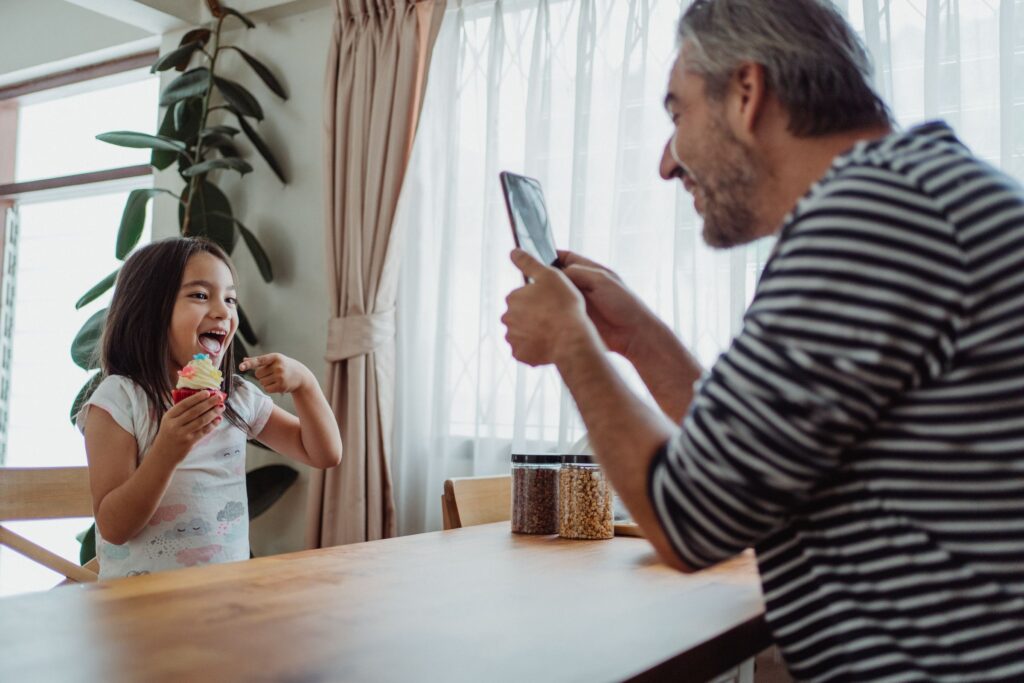
Point a phone straight at a child and the moment often changes on the spot: they freeze, shout, perform or leave the room.
Voice is usually the gentler option. Ask if you can record, then in the A Moment With app tap the + button, choose Voice Note and press Start. Set the phone down nearby and keep the conversation going. After that, it is just another thing on the breakfast table. A short recording made over cereal tends to sound more like your child than a sit-down interview ever will.
One practical catch: if the phone locks itself mid-sentence, the recording can cut out. Turn Auto-Lock up for breakfast (Settings › Display & Brightness on an iPhone, Screen timeout on Android) and back down afterwards.
If they do not want to be recorded, stop. Write the phrase down instead, or record yourself describing it later. The aim is to keep something true, not to win a negotiation with a four-year-old.
Choose the format that suits the moment
Voice, video, photos and writing each keep something different. Video catches expressions and movement. A voice recording of your child is less intrusive and keeps the rhythm of their speech. A photo gives the story an anchor, and writing holds the explanation when recording is not welcome or practical. On the phone, the add screen has a tile for each: Camera (photo or video), Library (for photos and videos already on your phone), Voice Note and Written Note.
You do not have to pick one format for an entire childhood. Use voice for the back-seat theory about dinosaurs, video for the dance performed in the lounge room and a written note for the sentence that arrived while your phone was in another room. The useful format is the one that lets the moment stay natural.
Add enough context for the future
A funny phrase makes perfect sense today because everyone knows the missing story. Toddler memories are slippery, though: in five years, you may remember the words and forget why they started. Add the child’s age, the place and one sentence about what was happening. For example:
Age four, eating pancakes on the kitchen floor because the table was covered in moving boxes. She announced that syrup is “pancake rain”.
That small note turns a cute quote into a scene. In the app, it goes in the moment’s caption. For a little order without much effort, give each child their own story with a chapter for each year: “Age three”, “Age four” and so on. (Switch off Use suggested chapter structure when you create it to start with your own.)
Keep the ordinary day around it
First steps and birthdays usually get recorded. The ordinary patterns of childhood are easier to miss: the greeting from the back seat after childcare, the rules of a game they invented (subject to change without notice), the way they narrate while drawing, the pancake recipe they are certain includes three spoons of cinnamon.
These moments are not filler between milestones. They are how family life sounds while it is being lived. If you want to capture childhood memories that sound like your actual house, record the Tuesday as well as the birthday.
Let the story grow as they do
A Moment With is a living digital time capsule, which means a childhood story does not need to be assembled in one sitting. Add a voice note today, a photo from the same stage next week and a few lines of context when you have time. A moment you have not filed yet waits in Drafts until you decide where it belongs. (New to the app? Here is how stories, chapters and moments fit together.)
Come back as they change. The toddler who said “pasketti” becomes a seven-year-old with firm opinions about how it should be eaten, and both belong in the same story. Grandparents hear a different version of your child, too. Send one of them a Request a Moment link asking for the best thing your child has told them lately, and they can answer by voice, video, photo or text in their phone’s browser, with no app or account. You see each answer first and decide whether it goes in.
Every so often, play the whole thing back in order with the play button on the story (Play story on the web). It will not be a polished highlight reel. It will be a story with texture.
Let your child have a say
Children deserve a voice in how their image and words are kept. Use language they understand. Ask whether you can record the story, tell them who you would like to share it with, and accept no without treating it as a missed opportunity.
Their comfort will change as they grow. A clip they loved at five might mortify them at twelve. Go back through the story together now and then, and listen when they want something kept more closely or taken out.
The settings do some of the work. New stories start on People, which shares them with your connections, so switch a child’s story to Private when you make it. Then only you and the people you add to the story can see it. Each moment has its own setting too, and you can change who sees a moment you added, or remove it, at any time. The account is yours, not your child’s. There is no public feed, no followers and no ads, so a five-year-old’s dinosaur theory is never competing for anyone’s attention, and nothing is public unless you choose it. For the detail, see who can see your stories.
None of this needs to make every recording serious. It just keeps the habit respectful, because the story belongs to the child at the centre of it as much as to anyone.
A simple idea for tonight
At dinner, in the car or before bed, ask: “What is something you know now that you did not know last year?”
If they are comfortable, record the answer in their own voice. Add their age and one line about where you were. That is enough. No montage, no annual interview, just one small piece of who they are today. If it catches on, here is how to turn family stories into a habit without making it a project.
Start with one voice, one question and one ordinary moment.
Prefer the app? Get A Moment With on the App Store or Google Play.