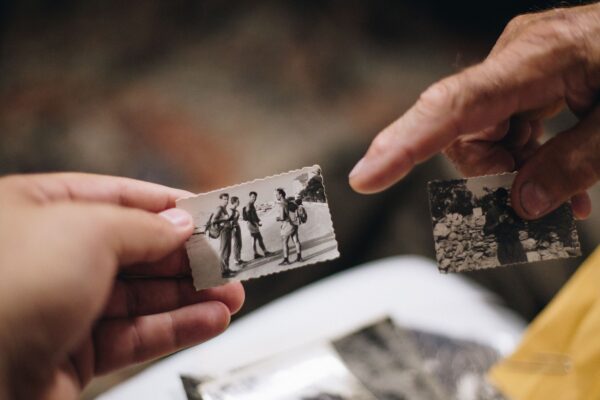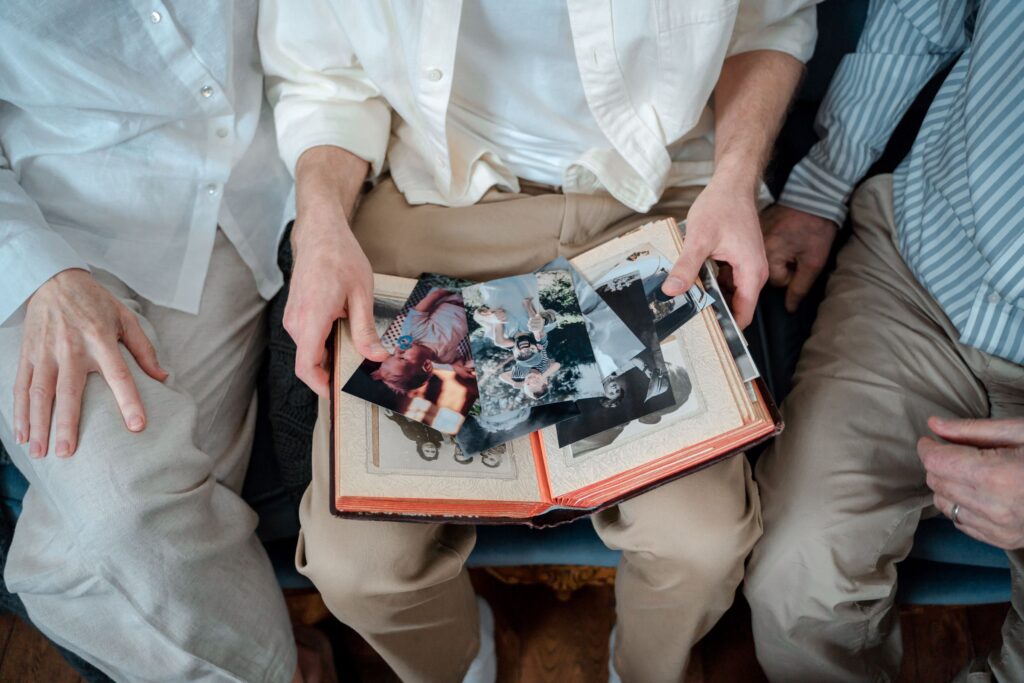
There is usually one photo in every family that creates more questions than answers.
Maybe it is Dad leaning against a blue Holden nobody remembers him owning. Maybe it is Nan at a kitchen table in a house no one can identify. Maybe it is a wedding photo with a man in the back row who looks familiar, but no one can agree on his name.
The image has survived. The story around it has become patchy.
Most of the stories behind old family photos were never written on the back. A print is good at showing what something looked like. It cannot tell you what happened five minutes earlier, who took it, why the day mattered or why everyone still laughs when it comes out.
You do not need to catalogue every album or build a family tree before you begin. One photo and one person who remembers it is enough.
Start with the photo that already starts a conversation
Do not begin with the most historically important image. Begin with the one people already talk about: the terrible haircut, the holiday where the car broke down, the birthday cake that collapsed before the candles were lit. A photo with a little mystery inside it gives the conversation somewhere to go.
Put the photo in front of the person who remembers it and leave some room before asking anything. They will often notice a detail you would never think to mention: “That dress was borrowed,” or “Your grandfather was furious because we were already late.” Suddenly the photo has a scene around it.
Ask questions that open a door
“Who is this?” is useful, but it often produces a name and nothing more. Better questions ask for a scene, a feeling or the next part of the story:
- What happened just before this photo was taken?
- What can you remember hearing or smelling that day?
- Who in the photo was most likely to cause trouble?
- What was happening in your life at the time?
- What is missing from this photo that would help me understand it?
- Who else would remember this day differently?
- What happened after everyone went home?
Choose the one that fits the image and listen to where the answer goes. For a longer set, try these questions to ask your grandparents.
Record the storyteller, not a perfect interview
A family story does not need studio lighting or a formal introduction. Too much production makes people feel they have to perform. Put the phone on the table, close enough to hear clearly, and let the conversation sound like a conversation.
Keep the pauses. Keep the laugh that arrives halfway through a sentence, and the moment someone says, “Actually, that is not how it happened.” Those are not mistakes to edit out. They are usually the best part of the recording.
Make the storyteller comfortable
Old photos can open complicated memories as well as funny ones. Before you press record, ask permission and explain who might hear it. Let the person choose what they share, and if a question lands badly, move on. The goal is a story they are happy to tell, not every fact the photo might hold.
In A Moment With you choose who sees each story, and each moment keeps its own setting, so one recording can stay Private even when the rest of the story is shared with family. Here is who can see your stories, explained.
Where to keep the stories behind old family photos
Not in a folder called “Scans 2”. A cloud drive can hold every photo your family has ever taken and still not tell anyone who the man in the back row is. Storage keeps the file, not the reason anyone kept it.
Keep the voice with the image, along with the names you know, the rough place, the occasion and why the photo matters to your family. In A Moment With, one story holds photos, voice notes, videos and written moments side by side, and each moment has room for a caption, a place and a date. If the original is a print, photograph it flat, in daylight, with the flash off. Then tap Voice Note in the app and record what the person remembers, in the same story as the photo.
The story does not have to be finished on day one. Start one on the free plan and add to it as details turn up.
What if nobody is completely sure?
Most family photo stories arrive with a gap or two: an uncertain name, a date, a place. That does not make the conversation useless. Record what is known, what is remembered and what is still in dispute. “We think this was taken in Bendigo in the late 1960s” is more honest, and more useful, than a confident guess.
One practical catch: a photo of a print takes the date, and sometimes the place, of the day you photographed it. Edit the moment, set the date to your best guess (When this happened in the phone app, When on the web), fix the place, and say in the caption that both are approximate.
A family story can hold a question as well as an answer, and the open question often brings someone else in: the woman at the edge of the photo might be obvious to a cousin who has never seen the album.
Invite the version that does not quite match
Families rarely remember a day the same way. One sibling remembers the rain; another insists it was thirty degrees. Dad says the blue Holden was his. His brother says Dad borrowed it and never gave it back.
Do not flatten that into one official account. Ask the brother too and keep both; the disagreement is often the most recognisable part (more on why family stories are better when everyone gets a say). If a relative will keep adding, Invite people (the Add tile on a story in the phone app) lets you add them to the story as an Editor, who can add moments of their own. They need an A Moment With account; the free plan is fine.
Do not turn it into a sorting project
The fastest way to avoid starting is to decide that, to preserve family history properly, you must first scan eight boxes, label every face and put seventy years of photographs in order. You can do that later if you want to. It is not the entry point.
Choose one photo from your camera roll, a frame on the wall or the envelope at the back of the cupboard. Ask one person one question, keep the answer with the image, and next week choose another. (Here is how to record family stories without making it a project.)
A simple first moment to capture
Find the oldest family photo on your phone, or photograph the one on the fridge. Then ask the person most likely to know the story: “What is happening here that the photo does not show?”
If you can sit together, record the answer on your phone. If they are a few hours away, or would rather think first, send them a Request a Moment link from the phone app:
- Add the photo to a story you own.
- Open the story and tap Request, next to Add in the story’s row of people.
- Write your question, tap Add a photo to ask about and choose the photo. They will see it with your question.
- Tap Send, then share the link wherever your family actually reads things.
On the web, the Request a Moment button on a story does the same, minus the photo for now.
They answer in their phone’s browser with no app or account: a voice message, a few written lines, a photo or a video. A link sent this way takes up to five answers, so it can go to the family group chat, competing Holden theories and all. Nothing goes into the story until you choose Add to story (or Decline) for each answer. An added answer becomes a moment in the same story as the photo, credited to the name they typed (“A friend” if they left it blank). The free plan includes five requests in total; Premium and Legacy+ let you ask as often as you like.
That one answer may identify a place, revive a forgotten family joke or finally settle who owned the blue Holden. And the next person who finds the photo gets the story with it.
Start with one photo and the voice behind it.
Prefer the app? Get A Moment With on the App Store or Google Play.